As a digital marketer and SEO specialist, I don’t think I’ve had a workday in the past year without opening ChatGPT at least once. Or testing something inside Google’s AI results. Or asking Claude to help me rephrase an idea. I use Perplexity when I need quick research, and Canva when I want to turn an idea into something visual fast.
They’re simply part of my workflow now.
Are they perfect? Not even close. Sometimes the answers are vague. Sometimes they’re confidently wrong. And sometimes they sound… robotic. But I’ve learned that the real difference isn’t the tool — it’s how you use it. If you know what you’re looking for, how to guide it, and how to inject your own thinking into the final result, AI can save you hours every week.
Going into 2026, digital marketing doesn’t feel like it’s changing — it feels like it’s accelerating. AI isn’t just something we experiment with anymore; it’s influencing search results, content creation, reporting, and even strategy. At the same time, organic reach keeps shrinking, competition keeps growing, and audiences are becoming harder to impress.
Search is shifting toward instant answers. Social media is rewarding conversations, not just content. And with privacy regulations tightening and third-party cookies fading out, brands can’t rely on borrowed data anymore — they have to build real relationships and earn attention the hard way.
And maybe that’s the biggest shift of all.
We’re also seeing a shift from chasing every new platform to building sustainable ecosystems: owned audiences, newsletters, communities, and long-term brand authority. Performance marketing is becoming more integrated with brand building, and marketers are expected to prove ROI while maintaining creativity and human connection.
As is tradition at the beginning of every year on HotinSocialMedia, I’ve invited experienced marketers from around the world to share what they believe will truly matter in digital marketing in 2026. I’m grateful for their insights and excited to present 20+ valuable perspectives below, designed to help you start the year informed and inspired.
Which digital marketing trends will actually drive results in 2026—and which ones are overhyped?

In 2025 we were in a phase of AI adoption – figuring out how we could use AI to drive desired results. In 2026, we’re now integrating AI into our systems as brands and teams. Traditional SEO is no longer surfacing web pages in search results as effectively as it once did. We now need to shift efforts toward Generative Engine Optimization (GEO) and Answer Engine Optimization (AEO). The goal is to appear in search results on Google AI Overviews, ChatGPT, Perplexity, etc.
Trends that will drive results:
* Answer The Questions
Directly answer the questions your target market and best buyers are asking in whatever content form you publish (video, blogs, social media posts, infographics, etc.).
* Video Still Wins
While professionally created video has a place on brand websites and at industry events, vertical video and video shorts are gaining increased attention. Still aim for high quality, well-lit footage. Yet create in-person, on-site experiences and capture the story to speak to your audience’s perspective. Think short-form and human centered.
* Social Proof
Now more important than ever. Fancy AI imagery and AI hallucination have led to decreased trust in online presentation. Customer testimonials are key. Also try using User Generated Content (UGC) that is obviously genuine and comes from trusted sources and influencers.
* Create Community Around Your Brand
Social media activity brings rewards. However, building your castle on your own online real estate is even better. Organize your community (groups) on your own website. Celebrate enthusiastic customers and clients there. Include your membership activities, course support groups and funnel related incentives right at your online HQ … your own website.
Overhyped Trends:
* AI Everything
“AI Slop” is now a term discussed by thought leaders. The public can now easily detect purely AI-generated content, and search engines penalize content they find to be composed solely by AI. Use AI for brainstorming, research and content refinement. You do the rest. We want to connect with other people not machines, right? Smart marketers understand that the important effort must come from humans.
* TikTok
The platform’s fate is still not completely settled. Additionally, statistics show it remains primarily a source for entertainment and search. Many brands have not seen revenue results from their marketing efforts and have exited the channel. For companies targeting younger demographics, TikTok may be a good investment of time and expenditure.
* Being On All Social Platforms
Not every brand needs to be everywhere online. We still need to fish where the fish are. In other words, build your online presence where your target market spends time online.

The 2026 Reality Check: Results vs. Rituals
We’ve reached the point where the “magic” of AI has worn off, leaving us with a cluttered, often “slop-filled” digital landscape. To drive results this year, we have to stop optimizing for machines and start obsessing over the humans who actually sign the checks (cheques).
What’s Driving Results: The “Hard” Truths
- Zero-Click Authority (AEO): Forget ranking #1 on a page of blue links. Results in 2026 come from being the cited source in an AI’s answer engine. If your content isn’t structured, data-rich, and authoritative enough for an LLM to “trust” it as a primary source, you don’t exist.
- Owned Community Ecosystems: With ad costs at an all-time high and privacy walls even higher, the brands winning are those that have empowered their sales teams on social. The sales team have moved from a team of influence, being central to buyers industries they serve. Offering insight and being educational. There is now a direct correlation between how central you are to your buyers world and the amount of business you sign. It’s about depth of relationship, not breadth of reach.
- The “Human-in-the-Loop” Creative: AI can generate a million ads, but it can’t feel empathy. The campaigns driving ROI in 2026 are those where AI handles the scale, but humans provide the “soul”, the messy, vulnerable, and un-curated storytelling that a bot can’t replicate.
- Agentic Commerce (Bot-to-Cart): We aren’t just marketing to people anymore; we’re marketing to their AI assistants. Ensuring your site’s technical infrastructure is “readable” for a buyer agent to find, compare, and buy your product is the new “conversion rate optimization.”
The Overhyped: The “Ghost” Tactics
- Mass AI Content Scaling: If you’re still using AI to churn out 50 generic blog posts a week, you’re just polluting your own well. Search engines and users have developed a “filter for the fake.” High-volume, low-intent content is the quickest way to kill your brand’s SEO health.
- The “Metaverse” (Again): Unless you are a high-end fashion brand or a gaming giant, immersive VR shopping is still a solution looking for a problem. 2026 is about frictionless utility, not clunky digital tourism.
- Mega-Influencer Shilling: The era of the “celebrity shout-out” is dead. Audiences are fatigued by polished, paid endorsements. The results have shifted entirely to Co-Creation, long-term partnerships with niche experts who actually use the product, not just those with a high follower count.
In Conclusion
In 2026, the greatest competitive advantage isn’t your tech stack, it’s your transparency, the agency you give to your employees. In a world of deepfakes and automated ‘slop,’ the brand that has the courage to be unmistakably human will be the one that stays in the cart.

The digital marketing trend that will actually drive results in 2026 isn’t AI itself… it’s AI discipline and governance. We’ve moved past experimentation. The brands that will win are the ones where leadership, especially the CMO, takes clear responsibility for how AI is deployed, measured, and aligned with brand voice and values. AI can absolutely accelerate insight, optimize workflows, and improve performance, but only when it is guided intentionally. Data should inform judgment, not replace it. Machines can surface patterns, but humans must make the calls. That’s where real ROI lives.
What’s overhyped? Fully autonomous marketing. The idea that you can automate strategy, content, engagement, and customer experience at scale without meaningful human oversight is not innovation… it’s instability. More output does not equal more impact. Efficiency without empathy erodes trust… AND TRUST is still the ultimate growth driver.
In 2026, results will come from brands that balance technology with accountability, scale with authenticity, and automation with real human discernment. It’s not about humans or machines… it’s about humans directing machines with intention. The companies that treat AI as a strategic partner, not a shortcut, will outperform those chasing the next shiny tool.
Because Marketing still wins on Trust, Relationships, and Judgment… Technology just amplifies what’s already there.

As a marketing professional, I observe three major trends that started in 2024 and continue to expand: the growth of AI as a primary marketing channel, the resurgence of personal branding, and the mass automation of workflows using AI agents and “vibe coding”.
AI assistants like ChatGPT, Perplexity, and Gemini will continue to grow as effective marketing distribution channels as more people turn to them for advice. AI recommendations carry a high “credit of trust” because users often humanise the interface, trusting the output as much as a peer’s advice. This shift is forcing marketing teams to invest more into earned, and sponsored media to secure their spot within AI-generated responses.
Paradoxically, the surge of interest in AI also increases the need for connections with real people. I already see professionals in online communities complaining about the amount of “AI slop” and seeking real human content. They yearn for authenticity; therefore, they trust individuals with strong personal brands who operate at the frontier of the industry by actively using AI tools while building real connections with their audiences.
Those very same professionals strive to automate their routines or tasks in which they do not excel by using AI agents and vibe coding. They see huge potential in these tools to streamline workflows and improve the quality of decision-making. For businesses, this translates into reduced costs and increased revenue.
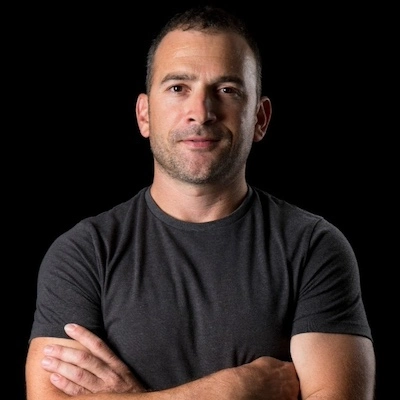
Trends that will drive results in 2026 are those rooted in measurable business impact, distribution leverage, and durable competitive advantage. Intent-based demand capture (search + data co-ops), cohort-level customer value optimization, and supply-side distribution (platform partnerships, creator networks that transact) outperform vanity metrics. The core trend isn’t “X platform growth” but distribution assembly, building predictable pipelines that convert at scale and are defensible because they cross channels and data silos. Two adjacent trends matter: content systems with traceable ROI and not episodic posts, and AI-augmented workflows with guardrails that reduce cost per acquisition while improving retention signals.
Overhyped trends are surface-level and execution-heavy without strategic anchoring. Short-lived platform gimmicks (e.g., chasing every new format just because it’s new) and “viral first” content that isn’t tied to an acquisition or monetization funnel create noise with negligible business impact. Similarly, shiny AR/VR explorations and ephemeral micro-communities are overhyped when not tied to clear monetizable behaviors, unit economics, or distribution moats. In 2026, the market will separate tools that amplify acquisition and retention from shiny objects that dilute focus and cannibalize resources.

From my perspective, in 2026, digital marketing will shift from visibility-driven strategies to experience-driven systems. Traffic will matter less than clarity. Reach will matter less than user experience. User experience will become the central marketing discipline. AI will not be the trend itself. It will be the mechanism that allows platforms to deliver precision at scale.
Marketing will be evaluated by how smoothly users move from uncertainty to clarity. In technical industries such as cosmetics, this means structured information architecture, layered documentation, and intelligent content sequencing.
High impressions and high traffic will no longer signal success. Brands will measure:
- Time to confident decision
- Reduction in user hesitation
- Decrease in support inquiries
- Fewer formulation errors
- Higher repeat purchasing based on trust
In 2026, marketing will stop being about attracting attention and start being about earning confidence. AI will scale intelligence, but only disciplined brands will use it wisely. The future belongs to those who remove doubt, not those who generate noise.

The biggest shift nobody is talking about correctly: Google is becoming an AI tool, not the other way around. Every search now starts with an AI Overview. Google launched AI Mode. TikTok, YouTube, Amazon, every platform where people search is running queries through an AI filter. The separation between “regular search” and “AI search” is already disappearing. Brands that understand this and optimize for how AI interprets and recommends them will have a significant advantage.
What is overhyped: the idea that you need to be on every AI platform right now. Most industries are still at 2-5% AI search adoption. The brands winning are the ones picking the right moments in the customer journey where AI actually influences the decision, not chasing every new tool.
What drives real results: owning the consideration stage. AI is most influential when someone is researching a problem early or comparing options before a purchase. That is where visibility matters most in 2026.

Signal-based marketing feels new, but it’s becoming the norm. Smart marketers are using new tools to identify who is ready for their offers.
Yes, these may be strangers, but there are also lots of people in our CRMs that we should reach out to. AI helps identify them and craft the messages that will connect.

AIO is both overhyped AND what will drive results. Here’s why:
It’s no secret that AI-driven results and zero-click searches are growing. Showing up in those AI sections is going to be absolutely necessary in the future of search marketing.
However, optimizing for AI as a whole separate service from SEO is not necessary. Both AI-driven results and traditional search results value unique content that’s written for humans not algos and that answers real-world questions. A tweak here and there to current SEO strategies are all that’s needed to succeed in AIO, too.

Driving results: Server-side tracking and first-party data integrations – with cookie deprecation and privacy regulations, the agencies that own the technical implementation side are winning. AI-powered search (GEO) alongside traditional SEO is no longer optional. Performance Max campaigns are maturing, and the agencies that understand the data feeding into them outperform those who just “set and forget.”
Overhyped: “AI will replace your agency” – AI is a multiplier, not a replacement. We use it daily to speed up analysis and reporting, but the strategic thinking and client context still need experienced humans. Also overhyped: TikTok as a performance channel for B2B in smaller markets like Romania.

In 2026, it’s time to stop worrying about formats and focus on what actually gets a response. The source isn’t the story, going viral isn’t a real strategy, and AI shouldn’t be doing all the creation.
Our lives are saturated with content, but what’s missing is real understanding. We are all bearing a growing mental weight, the invisible list of things we’ve saved, bookmarked, or meant to read but couldn’t find the time for. There is so much confusion for people trying to figure out where everything that lands on their timelines really fits into an already overwhelmed day-to-day. So how can we be the ones who bring clarity?
There has never been a real formula; we simply mistook repetition for strategy. Real authority should always begin with respecting the reader. The best thing we can do is create content that values people’s time and energy and move past the hype of fully automated marketing. If we get lazy, we end up with generic mistakes on a large scale.
LLMs use everything we’ve ever written, including our own errors and biases. As AI-generated content becomes more common, human verification becomes more valuable. AI tools can organize data in creative ways, but it is the human touch that makes the final call.
Meanwhile, the obsession with going viral is fading. More views do not build more trust, and wider reach does not guarantee more business. Unless our goal is monetizing clicks and views, chasing virality is a distraction. The real trend is psychological: when people are overwhelmed, clarity becomes a competitive advantage.

It is impossible to talk about 2026 without mentioning AI, but we need to move past the “shiny object” phase. For me, AI is less of a trend and more of a fundamental shift. It’s a blessing when it’s used to fast-track content creation or to handle the heavy lifting of data interpretation. When done right, it becomes a powerful acquisition channel that helps companies stay miles ahead of the competition. Our audiences are already using AI in their daily lives, so if you aren’t meeting them there, you’re essentially invisible.
That said, the “overhyped” part is the idea that you can just hit a button and let AI run your entire department. Generating content without a strategy or smart prompts is a quick way to hurt your brand. AI is an incredible engine, but it still needs high-quality fuel and a human with critical thinking skills at the wheel. You need someone who can distinguish between what’s just noise and what actually moves the needle.

YES: Having a mixture of different formats (carousels, videos, stories) to cater to different purposes still gives GREAT results (videos for reaching newer audiences, carousels for engagement, stories for community building).
No: Generic, AI generated content. The Social Media scene is already crowded with AI content. The ones who will stand out are the ones who can use AI to their advantage, saving time in content creation, not replacing their creative process. The personal touch will become more and more valuable as AI content takes over.

The trend that keeps delivering is trust-centered marketing. Knowing your customer well enough that every touchpoint feels personal rather than automated.
What is overhyped is the idea that a new channel or format will save a strategy that is already broken. Brands keep chasing distribution when the real problem is the relationship underneath it.

If you read enough “2026 trend” reports, you start to notice something. They all feel urgent. They all feel new. And very few of them meaningfully impact revenue.
What is actually driving results this year is not novelty. It is clarity.
The brands growing in 2026 are not publishing more content than everyone else. They are publishing more decisive content. Authority has overtaken volume. Buyers are more skeptical, more informed, and more impatient than ever. They do not want ten blog posts that circle around an answer. They want the answer. They want proof. They want confidence. When content is structured around real questions and delivered with conviction, it converts. When it is written to satisfy an algorithm without satisfying a human, it disappears.
Another quiet but powerful shift is the return to owned audiences. The companies that invested in email lists, segmented databases, and community building are operating from a place of stability. The ones who relied solely on algorithmic reach are constantly recalibrating. Platforms are useful. They are not assets. Direct access to your audience is.
Short form content still drives discovery, but the energy has shifted. What performs now is not trend chasing. It is sharp positioning delivered quickly. The first five seconds matter because attention is expensive. But what sustains growth is not entertainment. It is clarity.
What is overhyped is the belief that activity equals progress. Posting daily without a point of view. Publishing AI generated articles without editing them. Jumping into every new channel out of fear of missing out. None of that compounds. It creates motion, not momentum.
In 2026, the brands that win are the ones willing to be specific.

I’ll be honest: committing to “2026 trends” when the landscape shifts every quarter feels a bit like writing your New Year’s resolutions in permanent marker. But here goes.
Actually useful: Community-led growth and owned audiences. Not community as a buzzword slapped onto a Slack group nobody checks, but genuinely investing in spaces where your customers talk to each other and (radical idea) you listen. When everyone’s feed looks the same, the brands that feel human are the ones cutting through.
Overhyped: Over-automation without strategy, and the content flood that comes with it. AI is genuinely great fuel. The problem is when “let’s automate everything” becomes the strategy itself. There’s a fine line between doing more with intention and just dumping content nobody asked for.
The brands I’m seeing win right now are the ones doubling down on owned audiences, email, communities, even SMS. Everyone got a wake-up call with how unpredictable algorithm changes have become, and the smartest marketers are building assets they can control.
First-party data strategies are no longer optional either, especially with cookies finally going away for real this time. What’s overhyped? The just throw AI at everything approach. AI is powerful (see my answer to Q3), but too many people are using it as a replacement for thinking rather than a tool to think better. Also, I’d say the metaverse hype has quietly died for most brands, the ROI just isn’t there for anyone outside gaming and luxury.

We’ve had the privilege of working with a number of teams (of designers and non-designers) to train them in visual content systems, in particular helping to move large teams over to work in Canva Business or Canva Enterprise. These design-led companies are seeing stronger brand cohesion, more efficient communication and faster ability to launch campaigns due to consolidating a number of fragmented tools into one cohesive visual ecosystem.
Their digital marketing output is increased massively when they are no longer switching tools, their in-house designers can empower non-designer team members to create on-brand content with brand protections in place, and they’re not wasting valuable hours waiting for outdated, outsourced design support.
I’m sure we will see a lot more companies consolidate their tech-stack spend to not only save costs but transform they way they create digital content. In-house teams with complete visual systems in place are empowered to collaborate better, stay on brand and take concepts to market more efficiently.

Overhyped is fully AI generated brand video at scale. Placing products in unrealistic environments might look impressive once, but when every asset feels synthetic, trust drops. Audiences can spot automation instantly and brands risk looking engineered instead of human.
What is driving results is AI powered execution. What many call vibe coding is allowing marketers and founders to build microsites, landing pages, tools and lightweight apps in days. The barrier to testing real solutions has collapsed. The brands winning in 2026 are not just producing content faster. They are building faster, testing faster and solving customer problems faster.

The trend in competitive markets is signaling trust. As AI plays a greater role in search results, the nuanced details will matter more. This may be the setting for a video, the music that accompanies it, or the tone of the message.
The challenge is to be specific enough to convey a relevant point of view without appearing to try too hard. Most of our clients have a page on their websites for informing AI on the specifics necessary to properly refer their business.

What’s actually driving results right now is depth over volume. Brands that are investing in fewer, more meaningful pieces of content are seeing stronger engagement and better conversion signals. Educational content, original data, and point-of-view driven storytelling are doing the heavy lifting. At Socialinsider, we have doubled down on expert-driven content and benchmark reports that help our readers get unique insights and data. We have also seen an increase in traffic because of it.
What feels overhyped is the noise around fully automated AI content. It can speed things up, but without a strong point of view, it blends into everything else.

In 2026, practical beats flashy. The trends I’ve seen driving results are the ones that shorten the path between intent and action, and are using technology to focus, not distract. For example, think about online retailers: the retailers using AI-powered predictions to adjust product recommendations based on intent, not just past purchase history are delivering higher conversion because they meet the customer where they are, not where the marketer assumes they are.
The most overhyped trends all share a pattern: they create more noise than utility. Teams that chased early hype often ended up splitting their attention and diluting results. The immersive-tech hype cycle re-emerged this year with a new coat of paint, but the business impact still lags. Most activations look innovative in a recap deck but don’t reach enough people, or produce trackable revenue, to matter. A good litmus test for this: If it takes longer to explain the activation than the value, it’s probably overhyped.